


MCFT Philippines Team
A Conversation Could Make a Difference
Every year on 10th September, World Suicide Prevention Day provides an opportunity to raise awareness of suicide, encourage open conversations and, most importantly, remind people that support is available.
Suicide can be incredibly difficult to talk about. We might worry about saying the wrong thing, making someone uncomfortable or simply not knowing how to respond. But avoiding the subject doesn't make it go away.
This World Suicide Prevention Day, we want to use our platform at MCFT to share something genuinely useful for our colleagues, our customers, our partners and the wider communities in which we work.
Because you don't need to be a mental health professional to notice that someone might be struggling. Sometimes, simply noticing, asking and listening can be an important first step.
You don't always know when somebody is struggling
There isn't one way that somebody experiencing suicidal thoughts will look or behave. Someone can turn up to work, make people laugh, answer emails, spend time with their family and continue with everyday life while privately finding things incredibly difficult.
There may sometimes be changes that suggest somebody isn't coping. They might withdraw from people around them, seem unusually low or anxious, struggle with sleep, lose interest in things they previously enjoyed or begin talking about feeling hopeless, trapped or like a burden, but there may also be no obvious signs at all.
That's one reason everyday conversations matter.
A genuine "how are you?", followed by taking the time to listen to the answer, can create an opportunity for somebody to say something they haven't felt able to say before.

Team MCFT on a wellness walk
If you're worried about someone, ask
One of the biggest fears people have is that mentioning suicide could somehow put the idea into somebody's head.
It doesn't.
Samaritans advises that asking someone directly about suicidal thoughts can actually give them permission to tell you how they really feel and provide an opportunity for them to get support.
You don't need a perfect script.
You could start with:
"I've noticed you don't seem yourself recently. How are you doing?"
And if you're genuinely concerned about suicide, it is okay to ask clearly:
"Are you having thoughts about suicide?"
If they say yes, don't panic and don't feel that you have to immediately solve everything they're experiencing.
Listen. Take what they're telling you seriously. Avoid judgement or immediately trying to convince them that they "shouldn't feel that way". Give them space to talk and help them connect with appropriate support.
If you're concerned about somebody, staying with them, listening without judgement and helping them access further support can all make a difference.
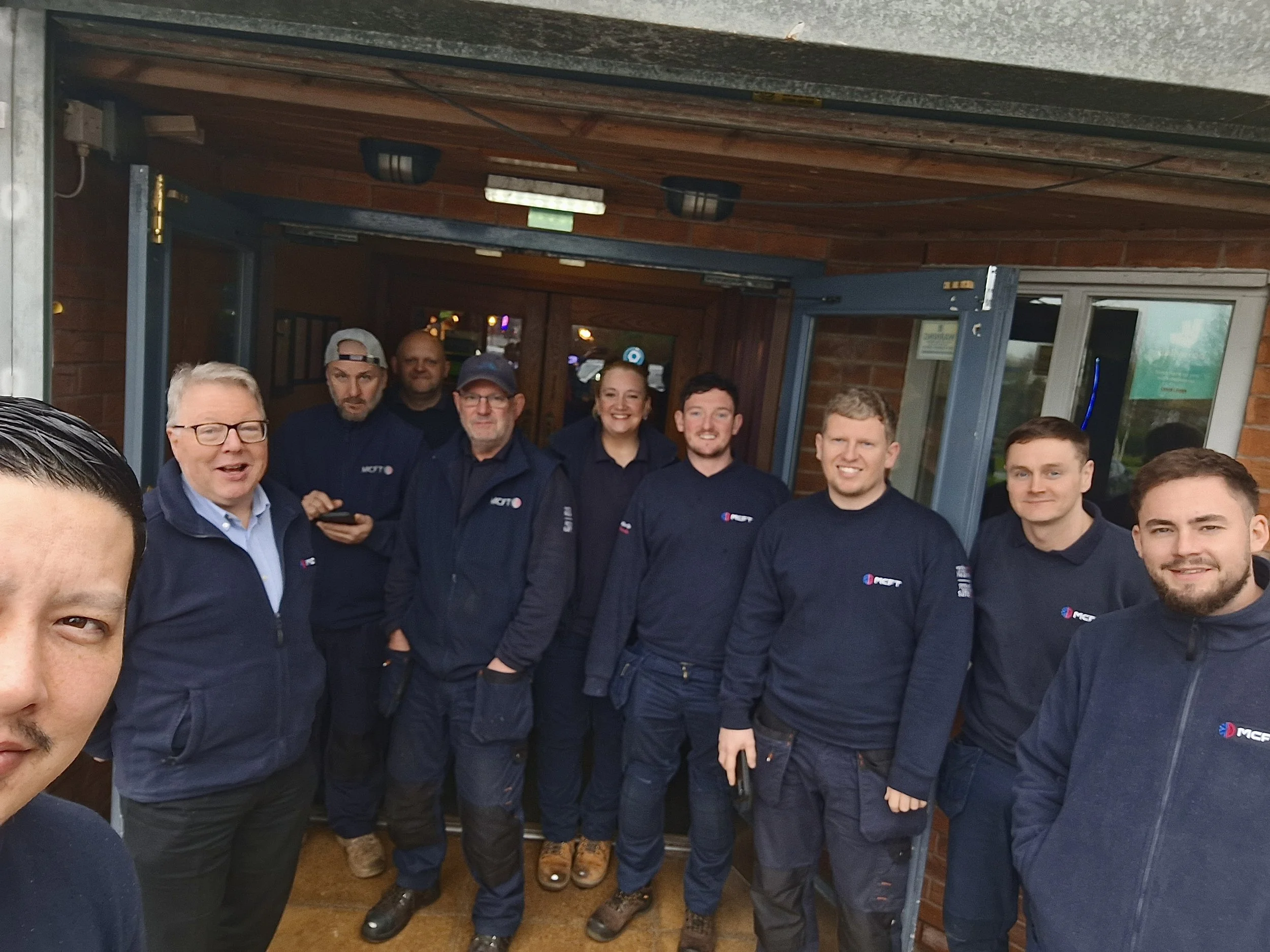
Sometimes listening is more important than finding the right words
When somebody tells us they're struggling, our instinct can be to fix it.
We might immediately offer solutions or try to reassure them:
"You've got so much to be happy about."
"Things will get better."
"Don't think like that."
These responses usually come from a good place. But someone experiencing suicidal thoughts may need something much simpler first: to feel heard.
You don't have to have an answer.
You can listen.
You can tell them you're glad they told you.
You can ask what would help them right now.
And you can help them find somebody who is trained to provide further support.

MCFT GCC Team Dinner
Check in again
Support shouldn't necessarily end with one conversation. If somebody has told you they're struggling, message them the next day. Ask them to grab a coffee. Give them a call. Sit with them at lunch. Ask them how they're doing again. It doesn't have to become a big conversation every time.
Small acts of connection can remind somebody that they're seen and that somebody cares enough to check back in.
Samaritans' current World Suicide Prevention Day campaign highlights that suicidal thoughts can be interrupted, including through interactions with friends, family and even people we don't know.
And if it's you who is struggling
You don't have to wait until things reach crisis point before asking for help. You also don't need to know exactly what to say. You can tell somebody:
"I'm struggling."
"I'm not feeling like myself."
"I'm having thoughts that are worrying me."
Or simply:
"I need someone to talk to."
That person could be somebody you trust, a colleague, friend, family member, your GP or one of the organisations below.
If speaking out loud feels too difficult, text-based support is available too. Shout, for example, provides free, confidential 24/7 support by text in the UK.
The important thing is not to feel that you have to deal with everything by yourself.
Where to find support
There are organisations available to listen, provide advice and help you work out what to do next.
Shout
Text SHOUT to 85258 for free, confidential, 24/7 text-based mental health support in the UK.
Visit Shout
Mind
Information and support covering mental health problems, treatments and where to get help. Call 0300 123 3393.
Visit Mind
Campaign Against Living Miserably (CALM)
Suicide-prevention and mental-health support, including support for people who are struggling themselves and those worried about somebody else. Call 0800 58 58 58.
Visit CALM
Hub of Hope
A UK mental-health support database designed to help people find services available in their local area.
Visit Hub of Hope
Cruse Bereavement Support
Support and information for people experiencing grief and bereavement. Call 0808 808 1677.
Visit Cruse Bereavement Support
Men’s Minds Matter
A suicide prevention charity focused on supporting men in crisis, providing practical information and psychological resources for men who are struggling, as well as those supporting them.
Visit Men’s Minds Matter
Samaritans
Call 116 123 free, day or night, 365 days a year. You do not need to be suicidal to contact Samaritans.
Visit Samaritans
PAPYRUS – HOPELINE247
Specialist suicide-prevention support for young people experiencing suicidal thoughts and people concerned about someone else. Call 0800 068 4141 or text HOPE to 88247. Telephone support is available 24 hours a day.
Visit PAPYRUS
NHS 111
If you need urgent mental health support, contact NHS 111 and select the mental health option where available.
NHS mental health support
Childline
Free, confidential support for children and young people. Call 0800 1111.
Visit Childline
Survivors of Bereavement by Suicide (SoBS)
Support for adults who have been bereaved or affected by suicide. Call 0300 111 5065.
Visit Survivors of Bereavement by Suicide
Andys Man Club
Free peer-to-peer support groups for men aged 18+, providing a safe space to talk openly about mental health. Groups meet every Monday at 7pm across the UK and online.
Visit ANDYSMANCLUB
If someone is in immediate danger
If you or somebody else is in immediate danger or has taken steps to end their life, call 999 or go to A&E.
Looking out for each other
At MCFT, our teams work across different locations, roles and communities, but looking out for one another is something that applies everywhere.
World Suicide Prevention Day is one day in the calendar. Checking in with the people around us shouldn't be.
We won't always know what somebody is dealing with outside the conversations we have with them. We won't always notice when somebody is struggling. And we won't always know exactly what to say.
But we can ask.
We can listen.
We can take somebody seriously.
We can check in again.
And we can make sure people know where support can be found.
Sometimes a conversation may feel small to the person starting it. To the person who needs it, it might mean much more.