

How Does a Refrigerator Actually Keep Food Cold?
Most people think a refrigerator creates cold. It doesn't.
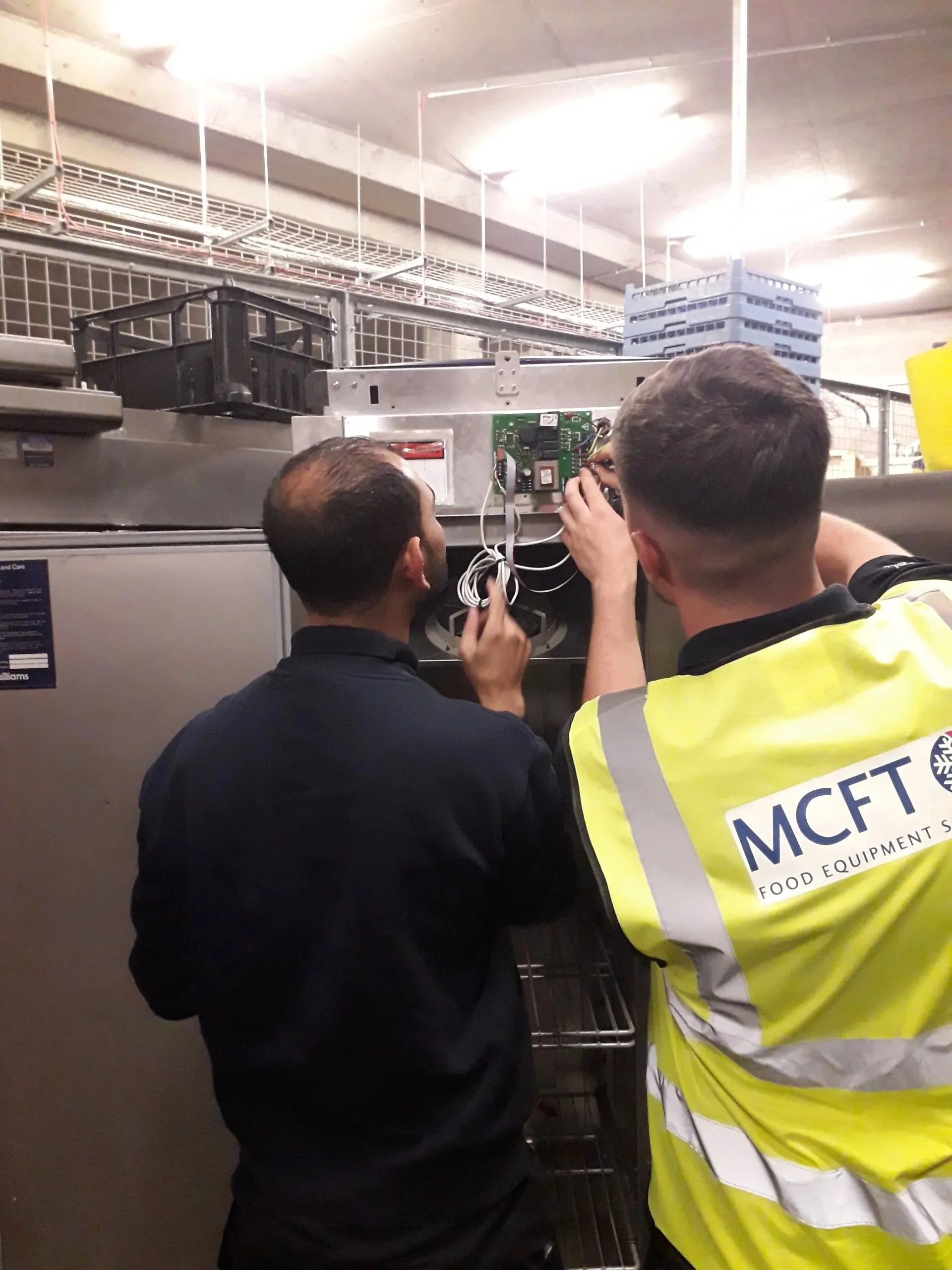
MCFT technicians working on a fridge
A refrigerator actually removes heat from inside the cabinet and releases it into the room. Think of it as a heat pump that moves unwanted heat from your food to the air outside the appliance. It does this continuously, thousands of times a day.
Step 1 – The Refrigerant Collects the Heat
Inside the refrigerator is a cold coil called the evaporator.
A special refrigerant flows through this coil.
As warm air from inside the cabinet passes over it, the refrigerant absorbs the heat.
This cools the air inside the fridge, keeping your food at the correct temperature.
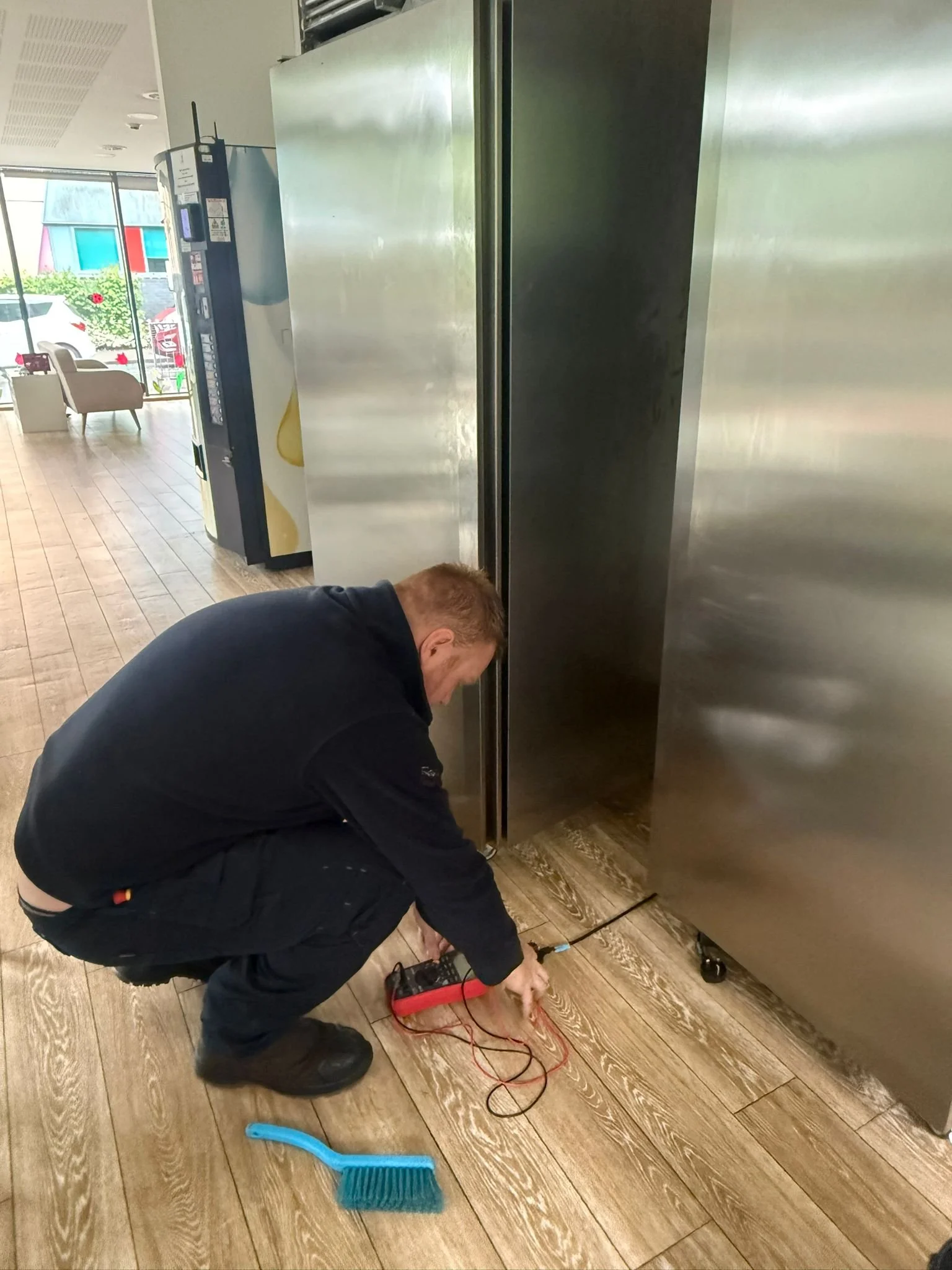
MCFT technician working on a fridge
Step 2 – The Compressor Pumps the Refrigerant
Once the refrigerant has absorbed the heat, it travels to the compressor.
The compressor is often called the heart of the refrigeration system.
It pumps the refrigerant around the system and increases its pressure, allowing it to carry the heat away efficiently.
Step 3 – The Heat Is Released
The hot refrigerant now passes through another coil called the condenser, usually located at the rear or underneath the appliance.
Air flowing across the condenser removes the heat, which is released into the kitchen.
This is why the back or underside of a refrigerator often feels warm.
The heat has simply been moved from inside the cabinet to outside it.
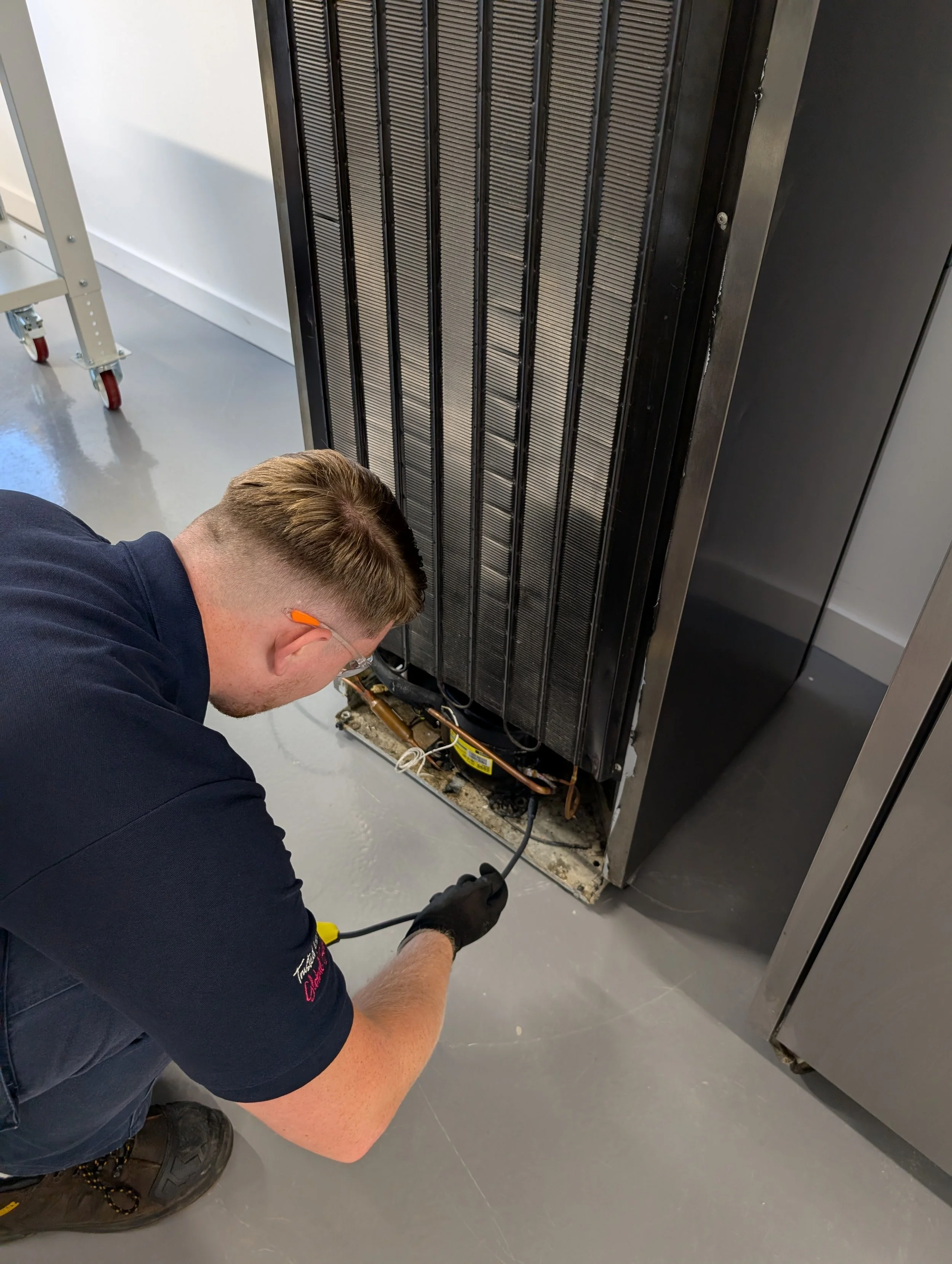
MCFT technician performing leak test on a fridge
Step 4 – The Refrigerant Becomes Cold Again
After releasing the heat, the refrigerant passes through a small device that suddenly reduces its pressure.
As the pressure drops, the refrigerant becomes much colder before returning to the evaporator, where it is ready to absorb more heat from inside the refrigerator.
Think about an aerosol can…
Have you ever noticed that an aerosol can feels cold after you've used it for a while?
As the contents leave the can, the pressure inside drops. This causes the remaining liquid and gas inside the can to cool, making the can feel cold to the touch.
A refrigerator uses a very similar principle.
By carefully reducing the refrigerant's pressure, it becomes cold enough to absorb heat from inside the cabinet. The compressor then raises the pressure again so the refrigerant can release that heat outside the fridge, before the cycle repeats.
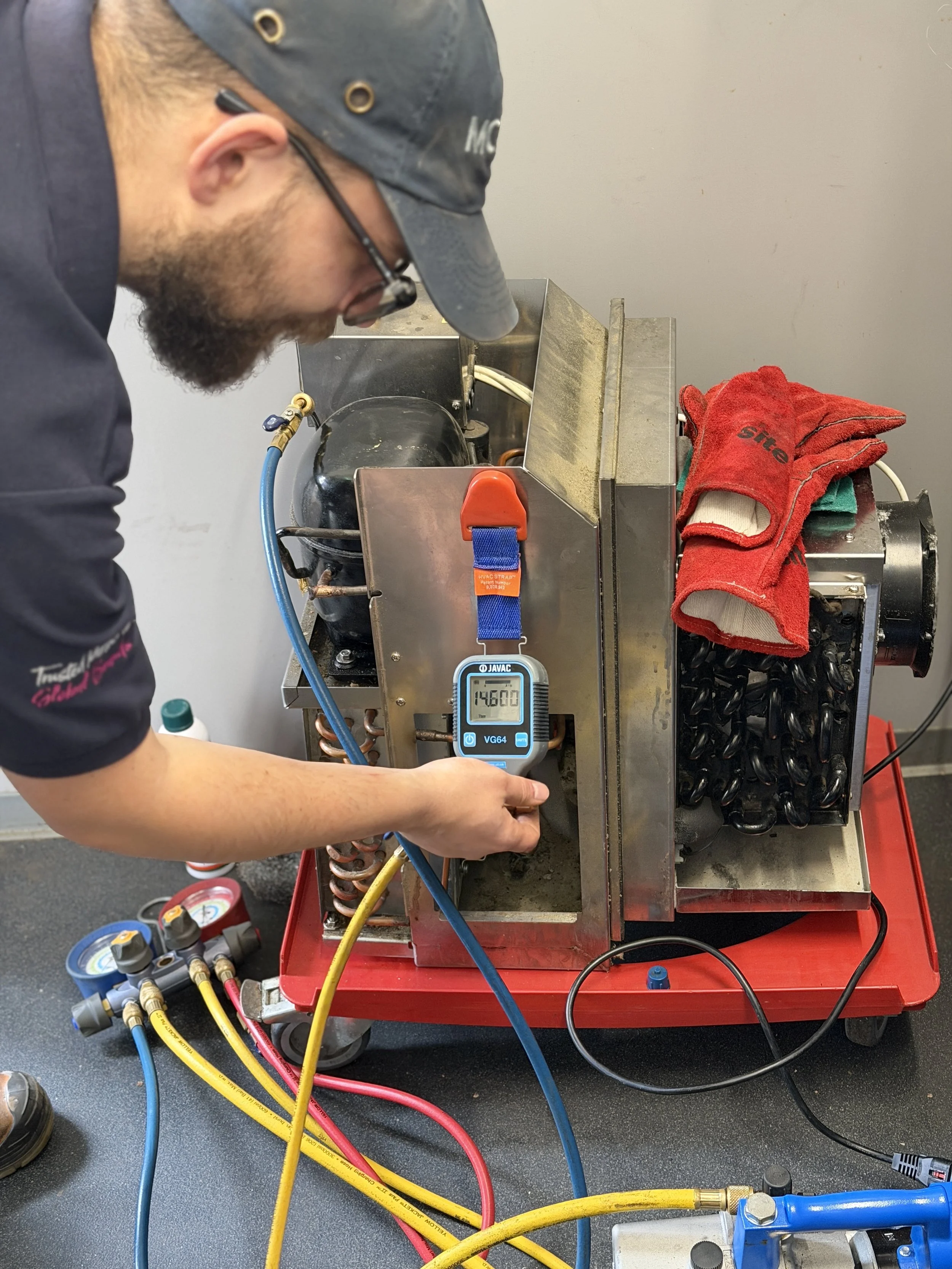
MCFT technician performing pressure test for refrigeration equipment
Why Good Airflow Matters
Because the refrigerator is trying to get rid of heat, it needs plenty of airflow around the condenser.
If the condenser becomes blocked with dust or grease, or the ventilation is restricted:
The compressor has to work harder.
The refrigerator uses more electricity.
Cooling performance falls.
Components wear out more quickly.
The likelihood of breakdown increases.
Why Overloading Affects Performance
Inside the cabinet, cold air needs to circulate around the food.
If products block the air vents or are packed too tightly together:
Air can't circulate properly.
Some areas become warmer than others.
The refrigerator runs for longer.
Food may not cool evenly.
That's why good loading practices are just as important as regular servicing.
Think of It Like This…
Imagine your refrigerator is a bucket removing water from a boat.
The water is the heat.
The bucket is the refrigerant.
The person carrying the bucket is the compressor.
The sea outside the boat is the kitchen.
As long as the bucket keeps carrying water out of the boat, everything stays dry.
If the bucket gets damaged, the person gets tired, or the water can't be tipped overboard, the boat starts filling up.
A refrigerator works in exactly the same way, it constantly removes heat from inside the cabinet and dumps it outside.
MCFT's Top Tip
Your refrigerator doesn't make cold, it moves heat.
Anything that makes it harder to remove heat, such as dirty condensers, blocked ventilation, damaged door seals or overloading the cabinet, makes the appliance work harder, increases energy consumption and can shorten its lifespan.
Understanding this simple principle helps explain why regular maintenance and good day-to-day operating practices are essential for keeping your refrigeration running efficiently and your food safe.